Seeing Faith Through the Eyes of the Original Audience
Why Context Matters
As we learned in the previous lesson, the Bible was written for us, but it was not originally written to us. Understanding the original setting helps us see what the first audience would have seen and hear what they would have heard.
When studying Scripture, several types of context can help us understand a passage:
Language Context – What did the original words mean?
Literary Context – Is this poetry, narrative, prophecy, or a parable?
Geographical Context – What role does the location play?
Historical Context – What was happening at that time?
Cultural Context – What customs and values shaped the people?
Biblical Context – How does this passage fit into God's larger story?
Each layer of context can reveal details that deepen our understanding of God's Word.
A Curious Verse
In Genesis 21:33 we read:
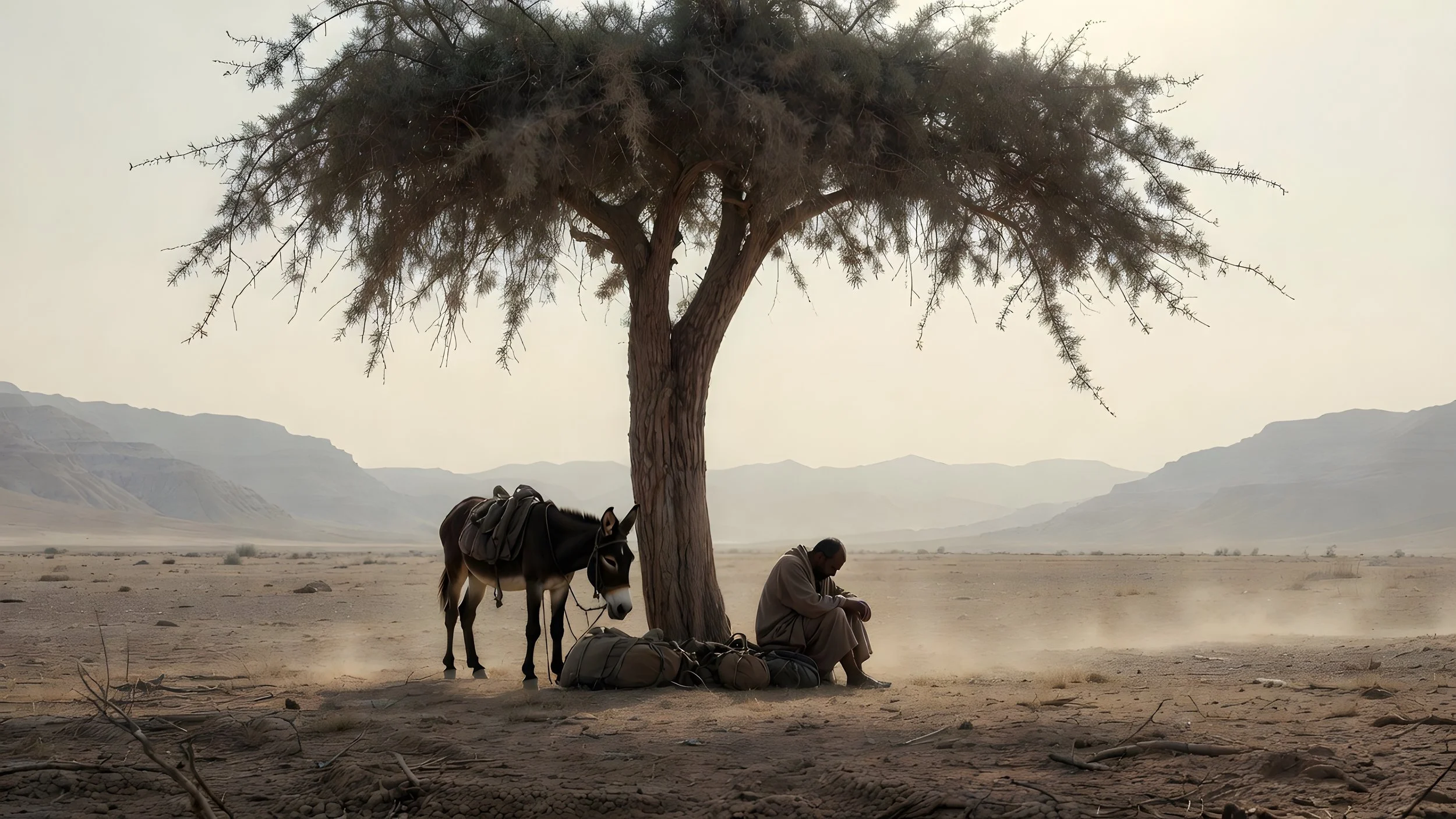
"Abraham planted a tamarisk tree in Beersheba, and there he called on the name of the Lord, the Eternal God."
For many readers, this seems like an insignificant detail. Why tell us what kind of tree Abraham planted? Why mention the location? Why does this matter?
To the original audience, it mattered a great deal.
Understanding the Tamarisk Tree
Abraham lived on the edge of the desert. In the desert, two things are precious: water and shade.
A tamarisk tree was one of the few trees capable of providing significant shade in that environment. However, it was extremely slow-growing and required continual care and watering to survive. It could take generations before a family fully enjoyed its benefits.
There was a saying among desert peoples:
You do not plant a tamarisk tree for yourself. You plant it for those who come after you.
A person who planted a tamarisk tree was making a statement: "I believe there will be a future here."
Abraham's Act of Faith
Just before planting the tree, God had reaffirmed His promises to Abraham. God promised that Abraham's descendants would inherit the land.
Abraham could have simply said, "I believe You." Instead, he demonstrated his faith through action.
He planted a tree he would likely never enjoy. His children might not enjoy it. Perhaps his grandchildren would.
The tree became a living testimony that Abraham trusted God's promises. In the Hebrew way of thinking, actions often communicated truth more powerfully than words.
The tamarisk tree was Abraham's way of saying: "God, I believe what You have said. I believe my descendants will be here long after I am gone."
What Does This Mean for Disciples?
Many of the most important things God calls us to do are tamarisk-tree investments.
We may never see the full results of:
Teaching our children God's Word
Discipling another believer
Serving in our church
Sharing the gospel
Building a godly marriage
Investing in our community
Yet God often works through faithful people who plant seeds for future generations.
As disciples, we are called not merely to think about our own lives but to consider those who will come after us.
Living with a Kingdom Perspective
Modern culture often encourages immediate results. We want quick answers, rapid growth, and instant success.
God's kingdom often works differently. Jesus compared the kingdom to seeds planted in the ground. Growth takes time. Faithfulness is often measured not by immediate results but by long-term obedience.
Abraham's tamarisk tree reminds us that discipleship is not only about what God is doing today. It is also about what God may do decades from now through our obedience.
The Greatest Tamarisk Tree
Perhaps the greatest example of planting for future generations is Jesus Himself. Jesus invested in twelve disciples. At the time, His ministry appeared small and insignificant. Yet through those disciples, the gospel spread throughout the world.
Jesus planted seeds whose harvest would continue long after His earthly ministry ended. As His followers, we are called to do the same.
Key Takeaways
Understanding biblical context helps us see Scripture more clearly.
The tamarisk tree was a powerful symbol of faith and future hope.
Abraham demonstrated his trust in God's promises through action.
Many acts of discipleship are investments whose full results we may never see.
Faithfulness often means planting seeds for future generations.
Disciples of Jesus are called to live with a long-term kingdom perspective.
Reflection Questions
What "tamarisk trees" has God called you to plant in your life?
Are there areas where you struggle because you cannot see immediate results?
How does Abraham's example challenge your understanding of faith?
Who invested in you spiritually, perhaps without ever seeing the full fruit of their efforts?
What legacy of faith would you like to leave for future generations?