Gog and Magog
The Red Sea
Now when Pharaoh had let the people go, God did not lead them by the way of the land of the Philistines, even though it was near, for God said, "The people might change their minds when they see war, and return to Egypt." (Exodus 13:17)
The great salvation from Egypt did not end on the eve of Passover beneath the sheltering blood of the Passover lamb. Than night marked the beginning of the redemption from Egypt. The conclusion took place seven days later at the Red Sea when God miraculously intervened to rescue His people from the pursuing army of Pharaoh. The seven-day Festival of Passover celebrates both events. On the first night of Passover, the seder meal commemorates the tenth plague, the lamb, and the meal with bitter herbs and matzah. The seventh day of Passover commemorates the crossing of the Red Sea, the drowning of Pharaoh's army, and the victorious Song at the Sea.
So far, the final redemption seems to be following a similar two-phase delivery plan. The beginning of redemption took place in the Apostolic Era, during the week of Passover, with the death and resurrection of the Lamb who was slain: "Messiah our Passover also has been sacrificed" (I Corinthians 5:7). The end of the matter will take place with the decisive salvation of His return. In that day, He will defeat His enemies in a stunning, miraculous victory akin to the deliverance at the Red Sea. That future victory is called the War of Gog and Magog. It's the last battle.
References
This lesson is adapted from Daniel Lancaster's teachings in The End of Days, as presented by First Fruits of Zion for the Torah Club.
Armageddon and Gog and Magog
In the seventh, wars. And at the end of the seven, the Son of David will come. (b.Sanhedrin 97a).
The last great push in the travail of redemption will be the War of Gog and Magog. The climactic end-times conflict plays an enormous role in Jewish eschatology, rabbinic literature, and early Jewish apocalypse. The final conflict provides the standard plotline for apocalyptic literature. It's a subject of keen interest to the sages and to the rabbis throughout the full gamut of rabbinic literature. A study of all those texts would occupy us for many lessons.
Christian New Testament readers might be more familiar with the term Battle of Armageddon: "He gathered them together into a place which in Hebrew is called HarMagedon" (Revelation 16:16). The Battle of Armageddon and the War of Gog and Magog are the same conflict. Armageddon is merely one of the battlefields on which the broader war takes place.
The Greek word Armageddon (Harmagedon, Ἁρμαγεδών) occurs only once in the Bible. It transliterates the Hebrew place name Mountain of Megiddo (Har Megiddon, הַר מְגִדּוֹ), a strategic location and historic battlefield in the Jezreel Valley where armies have contended for control of the road since the Canaanite Era. The hill of Megiddo creates a chokepoint beneath the Mount Carmel uplift for any large military force trying to move troops on the north-south corridor through the land of Israel. Deborah and Barak's miraculous victory over the chariot forces of Sisera took place in the broad plain of the Jezreel Valley between Megiddo and Mount Tabor (Judges 4-5). King Josiah lost his life at Mount Megiddo when he tried to hold that strategic location against Pharaoh Neco's northbound army as they passed through the land (2 Kings 23:29-30). In the end of days, the forces of Gog and Magog contend with the same chokepoint as they ascend toward Jerusalem from Galilee, Lebanon, and Syria. Ezekiel refers to it as "the valley of those who pass by east of the sea" (Ezekiel 39:1I). Other apocalypses name other fields of battle in the land, such as the Arbel Valley, the city of Lod (Lydda), and Jerusalem.
Principal texts about the War of Gog and Magog can be found in Isaiah 66:15-24, Ezekiel 37-38, Joel 3, Zechariah 12, Zechariah 14, and, of course, the book of Revelation. In addition, the sages interpreted several psalms in reference to Gog and Magog: Psalm 2, 20, 46, 83, I1O, 115-118, and 146-150. Correlating passages are drawn from various places throughout the Tanach.
References
This lesson is adapted from Daniel Lancaster's teachings in The End of Days, as presented by First Fruits of Zion for the Torah Club.
Seventy Nations
Son of man, set your face toward Gog of the land of Magog, the prince of Rosh, Meshech and Tubal, and prophesy against him. (Ezekiel 38:2)
The prophecies in Ezekiel 37-38 address an individual named Gog. He commands the forces of Magog, which tradition identifies as southeastern Russia between the Black and Caspian Seas. Gog leads a vast invasion of the Holy Land and lays siege to Jerusalem. He is called a "prince" and "the head of Meshech and Tubal." The Torah lists Magog, Meshech, and Tubal as sons of Japheth in Genesis 10:2, Where their names appear among the names of the seventy original families of nations descended from Noah.
Jewish interpretation, however, understands Gog and Magog as an international force representing all seventy nations. That's partly because the numerical value (gematria) for Gog and Magog (Gog u’Magog, גּוֹג וּמָגוֹג) adds up to seventy. The significant number seventy represents all the nations that descend from Noah's seventy sons. The number seventy hints that the war of "Gog and Magog" will include all seventy nations of the world (Midrash Tanchuma, Korach 12).
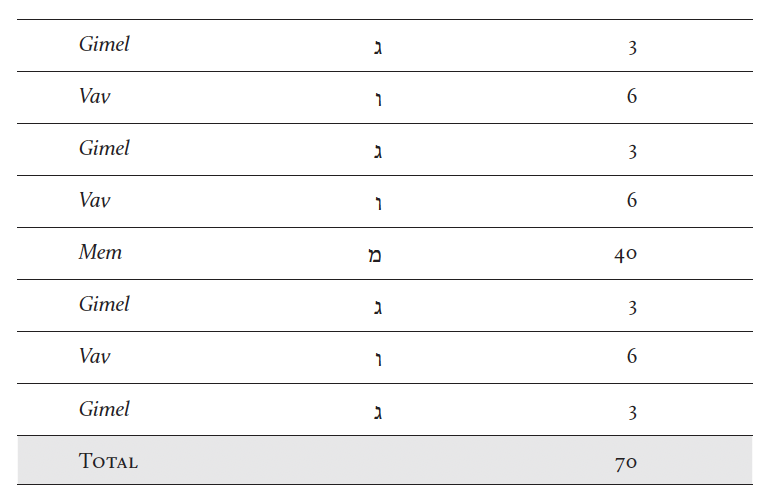
The all-nations interpretation for the identity of Gog and Magog agrees with parallel prophecies in Zechariah, which identify the invading force as "all the nations of the earth" (12:3, I4:2). Likewise, in the book of Revelation, Gog and Magog is a title for "the nations which are in the four corners of the earth" (Revelation 20:8), that is, all nations from all directions.
Gog and Magog = A global coalition of all nations committed to the destruction of Israel.
References
This lesson is adapted from Daniel Lancaster's teachings in The End of Days, as presented by First Fruits of Zion for the Torah Club.
The Valley of Jehoshaphat
"Thus I will harden Pharaoh's heart, and he will chase after them; and I will be honored through Pharaoh and all his army, and the Egyptians will know that I am the LORD." And they did so. (Exodus I4:4)
In the story of the redemption from Egypt, the LORD baits Pharaoh into pursuing the children of Israel so that He can deal with the Egyptian army at the Red Sea. He explains to Moses that the destruction of Pharaoh and his army will bring glory and honor to His name among the nations.
In the future to come, the LORD will bait all nations into pursuing the Jewish people into the Holy Land for the same purpose.
"The time is coming to gather all nations and tongues. And they shall come and see My glory," the LORD says (Isaiah 66:18). God intends to "gather all the nations" for battle in the "Valley of Jehoshaphat" (Joel 4:2 [3:2]). In that place, the LORD will strike Gog and Magog as He struck the Egyptian army at the sea: "I will magnify Myself, sanctify Myself, and make Myself known in the sight of many nations; and they will know that I am the LORD" (Ezekiel 38:23).
In the days of the Messiah, the nations will live in peace, beating their swords into plowshares and their spears into pruning hooks, but before that happens, they first beat plowshares and pruning hooks into weapons for the assault on Jerusalem:
Beat your plowshares into swords and your pruning hooks into spears; let the weak say, "I am a mighty man." Hasten and come, all you surrounding nations, and gather yourselves there. (Joel 4:10-I1 [3:10-11]).
As he lured Pharaoh to pursue the children of Israel to the Red Sea, the LORD drags Gog and his armies out to battle like a fisherman reeling in a fish with his hook in its jaw. He says, "I will bring you out, and all your army, horses and horsemen, all of them splendidly attired, a great company" (Ezekiel 38:4):
For behold, in those days and at that time, when I restore the fortunes of Judah and Jerusalem, I will gather all the nations and bring them down to the valley of Jehoshaphat. Then I will enter into judgment with them there on behalf of My people and My inheritance, Israel, whom they have scattered among the nations; and they have divided up My land. (Joel 4:2-3 [3:2-3])
The name "valley of Jehoshaphat" appears only in Joel's prophecy. The commentaries explain it as a symbolic location where the armies of Gog and Magog will be destroyed. The name Jehoshaphat (osvin?) means the LORD has judged: "Let the nations be aroused and come up to the valley of Jehoshaphat, for there I will sit to judge all the surrounding nations."
The prophecy also calls it the Valley of Decision: "Multitudes, multitudes in the valley of decision! For the day of the LORD is near in the valley of decision." The prophet describes a lush agricultural valley with cereal crops at full head, ready for harvest, and vineyards heavy with grapes, ready for treading. The LORD is the harvester and the nations are the ripe crop: "Put in the sickle, for the harvest is ripe. Come, tread, for the wine press is full; the vats overflow, for their wickedness is great." The LORD urges the nations to hasten to the muster: "Prepare a war; rouse your mighty men!
Let all the soldiers draw near, let them come up! ... Hasten and come, all you surrounding nations, and gather yourselves there" (Joel 4:II-14 [3:II-14]):
My decision is to gather nations, to assemble kingdoms, to pour out on them My indignation, all My burning anger; for all the earth will be devoured by the fire of My zeal. (Zephaniah 3:8)
References
This lesson is adapted from Daniel Lancaster's teachings in The End of Days, as presented by First Fruits of Zion for the Torah Club.
Are You the One?
When the king of Egypt was told that the people had fled, Pharaoh and his servants had a change of heart toward the people, and they said, "What is this we have done, that we have let Israel go from serving us?" (Exodus 14:5)
The LORD asks Gog, "Are you the one of whom I spoke in former days through My servants the prophets of Israel, who prophesied in those days for many years that I would bring you against them?" (Ezekiel 38:17). Apparently, other prophets before Ezekiel had already predicted this war. Isaiah's prophecies, for example, warn of a cataclysmic battle on the Day of the LORD. The Song of Moses (Deuteronomy 32) describes a final battle in which the LORD steps forth to intervene and defeat the enemies of His people. Rabbinic legend attributes the original prophecies about Gog and Magog to Eldad and Medad, who prophesied in the camp of Israel in the days of Moses (Numbers II:26). Whatever the case may be, Ezekiel was not the first prophet in Israel to foresee the last battle for Jerusalem.
The rhetorical question, , "Are you the one?", also suggests that the prophetic tradition was a little murky about the actual identity of Gog. The rabbis say that one cannot be certain about the identity of Gog until he comes up against Israel, but that did not stop anyone from guessing. In general, the term Gog and Magog is understood as "the nations in an uproar and the peoples devising a vain thing" when "the kings of the earth take their stand and the rulers take counsel against the LORD and against His Messiah" (Psalm 2:1-2).
Gog will "come like a storm ... like a cloud covering the land, you and all your troops, and many peoples with you" (Ezekiel 38:9). Gog will lead a multi-national coalition including "Persia, Ethiopia and Put ... Gomer with all its troops, Beth-togarmah from the remote parts of the north with all its troops—many peoples" (Ezekiel 38:5-6), "a great assembly and a mighty army" (Ezekiel 38:15). The international nature of the coalition includes nations from all compass points. Using modern names, Ezekiel gestures toward Iran, Lower Egypt, Ethiopia, Sudan, Eritrea, Libya and North Africa, Turkey, Armenia, Azerbaijan, Georgia, Eastern Europe, and Russia, but these are only representatives of a greater host.
The sages envisioned the War of Gog and Magog as a series of battles culminating with a final confrontation over Jerusalem. For example, Midrash Tehillim on Psalm 118 infers three wars of Gog and Magog. Some have suggested that World War 1 and World War 11 qualify as the first two battles in the war of Gog and Magog and that the final battle, World War in, will be fought for control of Jerusalem. Some opinions suggest that Gog and Magog represent an alliance of the Christian and Muslim nations. For example, the Zohar predicts, "All the nations will assemble in Rome," suggesting a Christian initiative, but then it says, "the children of Ishmael will at the same time rouse all the peoples of the world to come up to war against Jerusalem" (Zohar, l:19a). At the time of this writing, a Muslim Gog at the head of an international caliphate of Magog seems not at all unlikely.
The Bible, the apocalypses, and various traditions in rabbinic literature construe a variety of scenarios whereby the War of Gog and Magog might play out, but they all share some common features:
An international coalition of nations invades the Holy Land.
They lay siege to Jerusalem and conquer it.
God directly intervenes.
God smites the invaders with fire, hail, plague, and earthquake.
Birds feast on the carrion remains of the invaders.
The Jewish people are delivered.
The nations are subdued and annexed into the kingdom of God.
References
This lesson is adapted from Daniel Lancaster's teachings in The End of Days, as presented by First Fruits of Zion for the Torah Club.
King Hezekiah’s War of Gog and Magog
The War of Gog and Magog could go a lot of different directions. It doesn't even need to happen. As we have already learned, repentance can avert a harsh decree. The wars with Rome in the days of the apostles have already fulfilled a lot of the prophecies. The last two World Wars might count, too. We could do without another War of Gog and Magog.
But in this lesson, we will assume that the final battle is still coming. We will cobble together a narrative from Bible prophecies, Jewish legends, Talmud, Midrash, and apocalyptic sources like the Armilus legends we have been studying. But keep in mind, history might play out completely differently. To underscore that point, let's first take a look at a potential War of Gog and Magog that took place way back in the days of the Prophet Isaiah.
The Talmud suggests that the War of Gog and Magog could have happened in the days of King Hezekiah (b.Sanhedrin 94a). According to the original plan, God considered raising up Hezekiah to be the Messiah (Isaiah 7:14, 9:1-7). In that case, He would make Sennacherib into Gog and the Assyrian army into the forces of Magog!
Just as the Messiah is expected to do, Hezekiah leads a great national revival, turning the nation back to the worship of God and observance of His Torah. He even brings the survivors of the ten northern tribes into his Kingdom (2 Chronicles 29-31). So far so good! The Davidic King looks like he's on track to fulfill the mission of the Messiah.
Sure enough, Sennacherib comes out against him, just like Gog. He leads the Assyrian army in an invasion of Judah, destroying every fortified city in Judah before moving to conquer Jerusalem. He boasts about cooping up King Hezekiah inside the city like a bird in a cage. He blasphemes against the God of Israel and mocks the anointed king (Psalm 2). He boasts that no god of the nations has ever been able to withstand his power (Isaiah 36). He elevates himself above all other gods.
Hezekiah appeals to the LORD for help (Isaiah 37). God miraculously intervenes to rescue Jerusalem. "The LORD sent an angel who destroyed every mighty warrior, commander and officer in the camp of the king of Assyria" (2 Chronicles 32:21). The remainder of the army withdraws from Judah. Sennacherib retreats to his home in Nineveh, where he is assassinated.
Ultimately, Hezekiah does not fulfill the qualifications for the Messiah, so the LORD forestalls the redemption. Since Hezekiah did not offer thanks to God by composing a victory hymn as his ancestor King David did (or as Moses did at the Red Sea), the LORD decided to make someone else the Messiah. Some other invasion would have to become the War of Gog and Magog.
Nevertheless, the sages consider Sennacherib's assault on Judah as a portent of the final battle. After describing the size of Sennacherib's army, the Talmud says, "A similar force will accompany Gog and Magog" (b.Sanhedrin 95b).
We don't need to worry about whether or not the Talmud's speculation over the potential of Hezekiah becoming the Messiah is true. For our purposes, it's sufficient to see how the story establishes the pattern of events that characterizes the last battle. Just as the LORD delivered Jerusalem by striking Sennacherib's army with a plague, He will strike the armies of Gog and Magog in the future.
References
This lesson is adapted from Daniel Lancaster's teachings in The End of Days, as presented by First Fruits of Zion for the Torah Club.
Other Gogs and Magogs
If you had been one of the original disciples of Yeshua, you would have understood His talk about Jerusalem surrounded by armies, the destruction of the Temple, and the installation of the Abomination of Desolation as clear predictions of the coming War of Gog and Magog. All those motifs fit snugly into that context. If you had still been alive when the Roman siege of Jerusalem began, you would entertain no doubt whatsoever that you witnessed the War of Gog and Magog.
In his Hebrew commentary on the New Testament, Rabbi Yechiel Tzvi Lichtenstein says that, if the nation had heeded Yeshua's summons to repentance, God would have made Nero into Gog and the forces of Rome into the armies of Magog to fulfill the prophecy. At the climactic moment of the war, the risen Yeshua would have stood upon the Mount of Olives and defeated the Roman legions in 70 CE. (See Daniel Lancaster’s essay, “How the Gospel Should Have Ended,” Messiah Journal 119).
Using the same logical assumptions about potential points of redemption, another opportunity for the War of Gog and Magog occurred a generation later in the Bar Kochba Revolt (132 CE). If the nation had heeded the message of the apostles in the lead-up to that conflict, God might have made Hadrian into Gog and the forces of Rome into the armies of Magog. The risen Yeshua would have returned and stood on the Mount of Olives to defeat the Roman legions and liberate Jerusalem around 135 CE.
Nearly a century ago, another potential War of Gog and Magog played out. An enormous army of Nazi Panzers under the leadership of Rommel barreled through North Africa on their way to the Holy Land. Working closely with the Palestinian Arab community, the Nazis planned to conquer Jerusalem and build death camps to solve the Jewish problem in Palestine. In this situation, it's as if God placed Adolf Hitler in the role of Gog and the combined Axis forces into the army of Magog, but the miracle at El Alamein put a halt to their advance. (See Daniel Lancaster’s essay, "A Refuge in Israel: Salvation at El Alamein," Messiah Magazine 21).
On October 7, 2023, Hamas invaded Israel from Gaza and executed what felt like a dress rehearsal for the atrocities described in Zechariah I4:2. The invasion initiated a two-year war during which the world rallied together with the terrorists and expressed their sympathies with their cause. Demonstrations in the streets of every major Western city shouted for the dismantling of the State of Israel and, by direct implication, called for the genocide of Israelis "from the river to the sea." The United Nations, the World Court, the academic world, Ivy League schools, virtually all mainstream media, liberal progressives, far-right nationalists, and most major Christian denominations joined their voices to the worldwide outcry against the Jewish state. Polling data indicates that what dwindling support for Israel remains in the world exists primarily among the older generation. Those under the age of thirty are mostly united in a committed demonization of Israel, Zionism, and the Jewish people in general. This is how the stage is set for the coming Day of the LORD:
Why are the nations in an uproar and the peoples devising a vain thing? The kings of the earth take their stand and the rulers take counsel together against the LORD and against His Anointed. (Psalm 2:1-2)
References
This lesson is adapted from Daniel Lancaster's teachings in The End of Days, as presented by First Fruits of Zion for the Torah Club.
The Heavy Stone
Behold, I am going to make Jerusalem a cup that causes reeling to all the peoples around; and when the siege is against Jerusalem, it will also be against Judah. It will come about in that day that I will make Jerusalem a heavy stone for all the peoples; all who lift it will be severely injured. And all the nations of the earth will be gathered against it. (Zechariah 12:2-3)
In the end of days, the city of Jerusalem will be an international problem. The LORD says that Jerusalem will be like a cup of strong liquor that intoxicates the nations, causing them to reel about and stumble in confusion. Jerusalem will be like a heavy stone that a man tries to remove from his field. He assumes he is strong enough to take care of the problem himself, so he tries to lift the stone, but it's heavier than he thought. He wrenches his back in the effort and severely injures himself.
It's easy to see how this prophecy has been fulfilled throughout history. Jerusalem has been a big problem for the nations since the Roman Era. The task of subduing the Jewish revolts severely injured Rome. The Byzantine-era Romans lost the city to the Muslims. The Muslims lost the city to the Crusaders. The Crusaders lost the city to the Muslims. And so on and so forth until the modern era, when the Ottomans lost the city to the British in the First World War.
The British assumed they could lift the stone as they had done with every other conquered territory in their empire. After a few decades, they found Jerusalem too heavy to lift. Injured by the effort, the British walked away from the British Mandate over Palestine, leaving its future in the hands of the newly-formed United Nations.
That body of nations assumed they could lift the stone together by partitioning Palestine into an Arab state and a Jewish state. The Jewish people accepted the offer, but the Arab world rejected the plan on behalf of the Palestinian population. They organized an international coalition of invading Arab armies to cleanse the land of Jews from the river to the sea.
The invaders found the stone too heavy to lift. They retreated, humiliated and severely injured from the War for Independence. They tried again in I967 (Six-Day War) and again in 1973 (Yom Kippur War). With each conflict, the stone grew heavier, the liquor in the cup stronger.
Today, no other city, no other country on earth, and no other land in the world commands the center of world attention and outrage as the tiny land of Israel and the ancient city of Jerusalem. As Gog so aptly puts it, the Jews "live at the center of the world" (Ezekiel 38:12).
The international angst over Jerusalem, Israel, and the Jews is completely disproportionate to all other global concerns combined. Held fast in a supernatural trance, the world obsesses over the Holy Land and the city of Jerusalem. "It will come about, in that day ... all the nations of the earth will be gathered against it."
References
This lesson is adapted from Daniel Lancaster's teachings in The End of Days, as presented by First Fruits of Zion for the Torah Club.
Peace in the Middle East
They have healed the brokenness of My people superficially, saying, "Peace, peace," but there is no peace. (Jeremiah 6:14)
Since the end of World War II, peace in the Middle East has been the holy grail of international diplomacy. It has not been possible. Anti-Semitic Nazi propaganda, Cold War-Era Soviet manipulation, and Muslim jihadism combined into an unholy alliance dedicated to destabilization, international sanctions, and terrorism. The trifecta of anti-Semitism, anti-Westernism, and anti-Zionism, all fueled by oil money, created a propaganda-driven global movement against the Jewish state.
Nevertheless, world leaders have attempted to achieve the nearly impossible. In the 1970s, U.S. President Jimmy Carter made peace between Israel and Egypt in exchange for an Israeli withdrawal from Sinai. In the 1990s, U.S. President Bill Clinton normalized relations between Israel and Jordan. His attempts to broker peace with the Palestinian Authority through the Oslo Accords collapsed when Yasser Arafat rejected the offer of a Palestinian State alongside Israel. In the 2000s, the Arab League Peace Initiative and the United States "Road Map for Peace" asked for Israeli withdrawal from the so-called "West Bank" (Judea and Samaria), Gaza, the Golan Heights, and East Jerusalem. Israel withdrew from Gaza and pulled back West Bank settlement initiatives, but the vicious terrorist attacks of the Second Intifada derailed peace efforts. In the 2020s, U.S. President Donald Trump initiated a series of alliances with cooperative Arab nations under the title of the Abraham Accords. Many analysts suggest the October 7 massacre was, in part, calculated to derail those peace plans. Subsequent to the Gaza War (as of this writing in November 2025), the American President has introduced the latest version of the plan in close cooperation with Qatar and other Arab powers, and he has declared an "everlasting peace" and an "eternal peace" in the Middle East.
References
This lesson is adapted from Daniel Lancaster's teachings in The End of Days, as presented by First Fruits of Zion for the Torah Club.
The False Peace
The day of the Lord will come just like a thief in the night. While they are saying, "Peace and safety!" then destruction will come upon them suddenly like labor pains upon a woman with child, and they will not escape. (I Thessalonians 5:2-3)
One of these days, one of these Middle East peace initiatives might lay the ground for the antichrist. The book of Daniel warns that the last years before the coming of the Messiah begin with Middle East peace.
In Daniel II, the despicable King Antiochus Epiphanes, "the little horn," offers Egypt guarantees of security and peace, bringing hope for regional stability:
After an alliance is made with him he will practice deception, and he will go up and gain power with a small force of people. In a time of tranquility he will enter the richest parts of the realm ... both kings, their hearts will be intent on evil, and they will speak lies to each other at the same table; but it will not succeed, for the end is still to come at the appointed time. (Daniel II:23-24, 27)
The peace treaty is a ruse. Antiochus betrays both Egypt and his Jewish subjects in Jerusalem and Judea. He desecrates the Temple, abolishes the daily sacrifices, sets up his idol, "the abomination of desolation," and "by smooth words" introduces religious apostasy (Daniel II:31-32).
At that point in Daniel's prophecy, the vision about Antiochus Epiphanes seems to merge into a vision of the antichrist "until the end time; because it is still to come at the appointed time" (Daniel II:35). The megalomaniacal tyrant exalts and magnifies "himself above every god" and speaks "monstrous things against the God of gods; and he will prosper until the indignation is finished, for that which is decreed will be done" (Daniel II:36).
He will make a firm covenant with the many for one week, but in the middle of the week he will put a stop to sacrifice and grain offering; and on the wing of abominations will come one who makes desolate, even until a complete destruction, one that is decreed, is poured out on the one who makes desolate. (Daniel 9:27)
References
This lesson is adapted from Daniel Lancaster's teachings in The End of Days, as presented by First Fruits of Zion for the Torah Club.
Land of the UnWalled Villages
So he made his chariot ready and took his people with him. (Exodus 14:6)
A Middle East peace agreement must already be underway when Gog sets out to attack the Holy Land. The forces of Gog come against Israel after it has been "restored from the sword" and after its "inhabitants have been gathered from many nations... and they are living securely" (Ezekiel 38:8). As Gog formulates his plan of action, he describes the land he intends to assault:
I will go up against the land of unwalled villages. I will go against those who are at rest, that live securely, all of them living without walls and having no bars or gates, to capture spoil and to seize plunder, to turn your hand against the waste places which are now inhabited, and against the people who are gathered from the nations, who have acquired cattle and goods, who live at the center of the world. (Ezekiel 38:10-12)
Prior to 1948, a future fulfillment of the prophecies about the War of Gog and Magog did not make sense. Even if Gog and Magog did invade the Holy Land, the Jewish people were not present to be invaded. Today, the return of the people to the land and the advent of the modern State of Israel have set the stage. Half the world's Jewish population now dwells there in relative security. "The waste places [of the land of Israel] are now inhabited" (Ezekiel 38:12). The success of the modern state raises the possibility "to seize plunder, to carry away silver and gold, to take away cattle and goods, to capture great spoil" (Ezekiel 38:13). The preconditions for the War of Gog and Magog are all present in the modern State of Israel and its ambitions toward peace in the Middle East:
Gog and Magog will come up against the Land of Israel, because they will hear that Israel is without a king and sits in safety. Instantly they will take with them seventy-one nations and go up to Jerusalem. (Vayosha)
We waited for peace, but no good came; for a time of healing, but behold, terror! (Jeremiah 8:15)
References
This lesson is adapted from Daniel Lancaster's teachings in The End of Days, as presented by First Fruits of Zion for the Torah Club.
Devising a Vain Thing
The LORD hardened the heart of Pharaoh, king of Egypt, and he chased after the sons of Israel as the sons of Israel were going out boldly. (Exodus 14:8)
Psalm 2 asks, "Why are the nations in an uproar? And the peoples devising a vain thing?" The nations plot "against the LORD and against His Messiah" (Psalm 2:2). The demonic lies of Satan, the Beast, and the False Prophet gather the kings of the whole world for war on the great day of God (Revelation 16:14).
The Midrash imagines the discussions inside the war cabinet of Gog and Magog. Gog's advisors review previous attempts to eradicate the Jewish people. Gog declares, "The schemes of Pharaoh and Haman failed because they did not realize that the Jews have a Patron in Heaven. I will not make the same mistake. I will first confront their Patron, and then I will destroy them" (Leviticus Rabbah 27). Gog assumes that by removing the daily sacrifices, defiling the Temple, and exalting himself in the place of God, he will strike God and render Him unable to assist the Jews. Then he will succeed in their extermination, accomplishing what so many others before him have failed to do.
Psalm 2 replies, "He who sits in the heavens laughs, the Lord scoffs at them" (Psalm 2:4):
Scoundrel! Do you come to make trouble against Me? How many hosts are at My service? How many lightnings? How many thunders?... How many Seraphim and how many angels? By your life! I will wage war with you. (Zechariah 14:9, Leviticus Rabbah 27:1, Esther Rabbah 7:18)
References
This lesson is adapted from Daniel Lancaster's teachings in The End of Days, as presented by First Fruits of Zion for the Torah Club.
Jerusalem Ravaged
The enemy said, "I will pursue, I will overtake, I will divide the spoil; My desire shall be gratified against them; I will draw out my sword, my hand will destroy them." (Exodus 15:9)
The prophets paint terrifying scenes of the fall of Jerusalem (may Heaven defend us). The story plays out much as it did in the days of the apostles when Nero sent the Roman legions against Jerusalem.
Gog and Magog enter the land of Israel. Resistance melts away before them. Their armies cover the land like storm clouds out of the north (cf. Jeremiah I:14). "There will be a time of distress such as never occurred since there was a nation until that time" (Daniel 12:1, cf. Matthew 24:21).
The vast and innumerable host musters in the Jezreel Valley near the ancient city of Megiddo (Revelation 16:16), i.e., Armageddon. They advance like a swarming locust plague covering the land:
Before them the people are in anguish; all faces turn pale. They run like mighty men ... when they burst through the defenses, they do not break ranks. They rush on the city, they run on the wall. They climb into the houses, they enter through the windows like a thief. Before them the earth quakes, the heavens tremble, the sun and the moon grow dark, and the stars lose their brightness. (Joel 2:6-10)
Jerusalem falls.
I will gather all the nations against Jerusalem to battle, and the city will be captured, the houses plundered, the women ravished and half of the city exiled, but the rest of the people will not be cut off from the city. (Zechariah 14:2)
The soldiers of Magog plunder the houses. They rape the women they find. As much as half of the population is captured and deported to who-knows-where. The rest of the people remain trapped under the boot of the occupiers as "they tread underfoot the holy city" (Revelation II:2). Then "Jerusalem will be trampled underfoot by the Gentiles until the times of the Gentiles are fulfilled" (Luke 21:24).
If we were to take the apocalyptic narratives of Gog and Magog, the anti-christ, Armilus, and the book of Revelation all at face value, we would need to place the collision between the antichrist and the two witnesses at this point in the story. That drama plays out in the streets and the marketplace of occupied Jerusalem. Also at this point, the antichrist takes control of the Temple and brings an end to the daily sacrifices. He declares his divinity and erects the abomination:
He will destroy the sanctuary, stop the daily offering, the holy people will be dispersed, and he will hand them over to destruction, despoiling, and panic. Many of them will perish due to their faithfulness to Torah, but others will abandon the Torah of the Lord and worship the idols. "When they fall, they will be granted a little help" (Daniel II:34) during the time that the daily offering ceases and the wicked ones install the one whose name is abomination in the Temple. (Sefer Zerubabbel)
The antichrist imposes his religion. "All who dwell on the earth will worship him" (Revelation 13:8). Those who cooperate receive his mark. Anyone who does not cooperate suffers his wrath. Faithful Levitical priests who refuse to participate in his blasphemous sacrileges are tortured (Apocalypse of Elijah). "If anyone is to be taken captive, to captivity he goes; if anyone is to be slain with the sword, with the sword must he be slain. Here is a call for the endurance and faith of the saints" (Revelation I3:10 ESV).
They worship the Beast, saying, "Who is like the beast, and who is able to wage war with him?" (Revelation 13:4). But the faithful among Israel refuse. They try to evade him. They hide from his forces as Jews did in Nazi-era Europe to avoid the death camps:
Israel will experience distress such as there never was before. They will flee into towers, among mountains, and into caves, but they will be unable to hide from him. All the nations of the earth will go astray after him except for Israel, who will not believe in him. (Sefer Zerubabel)
Those who are unable to bear up under the tortures of that king will take gold and flee over the fords to the desert places. (Apocalypse of Elijah)
References
This lesson is adapted from Daniel Lancaster's teachings in The End of Days, as presented by First Fruits of Zion for the Torah Club.
Refuge in the Wilderness
The two wings of the great eagle were given to the woman, so that she could fly into the wilderness to her place, where she was nourished for a time and times and half a time, from the presence of the serpent. (Revelation 12:14)
Yeshua told His disciples to prepare to flee their homes and take refuge in the wilderness of Judea. "When you see Jerusalem surrounded by armies, then recognize that her desolation is near ... those who are in midst of the city must leave, and those who are in the country must not enter the city" (Luke 21:20-21). He warned them to also watch for the definitive sign of "the abomination of desolation... standing in the holy place" as predicted in the book of Daniel (Matthew 24:15). Its appearance would be a sure sign that the moment had arrived:
Those who are in Judea must flee to the mountains. Whoever is on the housetop must not go down to get the things out that are in his house. Whoever is in the field must not turn back to get his cloak. But woe to those who are pregnant and to those who are nursing babies in those days! But pray that your flight will not be in the winter, or on a Sabbath. For there will be great distress upon the land and wrath to this people; and they will fall by the edge of the sword, and will be led captive into all the nations. (Matthew 24:16-20; Luke 21:23-24)
A firm midrashic tradition about the War of Gog and Magog also describes Jewish refugees fleeing into the Judean wilderness to escape the great persecution of those days. The LORD protects and provides for the refugees in the wilderness (cf. Ruth Rabbah 5; Numbers Rabbah II: 2; Song of Songs Rabbah 2.9.3; Midrash Tanchuma, Eikev 7, cf. Job 30:4).
A similar story appears in the vision of the woman and the dragon. She is given two wings like those of an eagle to carry her to refuge in the wilderness, "where she was nourished for a time and times and half a time, from the presence of the serpent" (Revelation 12:14).
With explicit allusion to the generation of Moses, the refugees from Judea survive in the wilderness for a period of forty days or forty-five days, or according to Rabbi Akiva, for forty years. Initially, they subsist on what meager resources they can procure, such as saltwort, an edible desert plant foraged in times of extreme poverty:
The remnant of Israel will flee to the wilderness of the nations and will dwell there forty-five days without bread and water, except that the grass of the field will be their food. (Midrash Rabbi Shimon bar Yochai)
"How blessed is he who keeps waiting and attains to the 1,335 days!" These are the [additional] forty-five days that Israel will gather and eat saltwort. (Ruth Rabbah 5, Daniel 12:12, cf. Job 30:4).
For forty days-their food will be from the saltwort plucked from bushes and the root of the broom shrub to sustain them. (Sefer Zerubabbel, cf. Job 30:4)
As with the generation of Moses, the hardships they endure in the wilderness test their loyalty. At that time, "Anyone who believes in [the Messiah] will live, but one who does not believe in him will go to the nations of the world and they will kill him" (Ruth Rabbah 5, cf. Habakkuk 2:4). Those who remain steadfast in the wilderness are divinely sheltered as the conflict continues. The LORD offers them something better than saltwort: "Ultimately, the Holy One blessed be He will appear to them and rain down manna for them" because "that which has been is that which will be, and that which has been done is that which will be done. So there is nothing new under the sun" (Midrash Rabbah, Ecclesiastes I:9).
The midrashic story concludes with the arrival of the Messiah. He appears among the refugee community sheltering in the wilderness. He leads them out of the wilderness like Moses leading the children of Israel. They join His retinue and return with Him to Jerusalem to defeat the armies of Gog and Magog.
References
This lesson is adapted from Daniel Lancaster's teachings in The End of Days, as presented by First Fruits of Zion for the Torah Club.
The LORD is a Man of War
The LORD is a man of war, the LORD is His Name! Pharaoh's chariots and his army He has cast into the sea. (Exodus 15:3-4, my translation)
From Jerusalem's perspective, the sun always dawns over the top of the Mount of Olives. As the events described above transpire, the seventh angel pours out the contents of the seventh bowl, and the last draught of the LORD's wrath falls upon the earth. A loud voice calls out from the heavenly Temple, declaring, "It is done" (Revelation 16:17):
Then the LORD will go forth and fight against those nations, as when He fights on a day of battle. In that day His feet will stand on the Mount of Olives, which is in front of Jerusalem on the east. (Zechariah 14:3-4)
The dark night of Gog and Magog ends with a sunrise as the LORD, like the splendor of the dawn, strides onto the Mount of Olives east of Jerusalem. At that hour, the LORD Himself steps forward as a warrior going to war on the day of battle. "For the LORD will execute judgment by fire and by His sword on all flesh, and those slain by the LORD will be many" (Isaiah 66:16). "He shall do battle with those nations as in the day when he did battle by the Red Sea." (Zechariah 14:3, Targum Yonatan) He will directly intervene to defeat His enemies, just as He did when He drowned Pharaoh's army.
In what sense do the LORD's feet stand upon the Mount of Olives? Is this merely anthropomorphism, or does Zechariah 14:4 describe the coming of the Messiah? Remember that forty days after His resurrection, the disciples of Yeshua watched Him ascend to the clouds from atop the Mount of Olives. The angels told them, He "will come in just the same way as you have watched Him go into heaven" (Acts I:II). The feet of the LORD that will stand on the Mount of Olives in the day of battle find flesh and form in the scarred feet of Yeshua of Nazareth:
The generation of the Messiah will be on the point of being carried into captivity but will be spared, as it says, "For I will gather all nations against Jerusalem to battle." And how do we know that Messiah will inspire fear? Because it says [in Isaiah II:4], "He will strike the earth with the rod of His mouth." (Song of Songs Rabbah 6:25)
A trumpet will sound, and all the inhabitants of the earth will hear it (Isaiah 18:3). "There were flashes of lightning and sounds and peals of thunder" (Revelation II:19). "Just as the lightning comes from the east and flashes even to the west, so will the coming of the Son of Man be" (Matthew 24:27). "Then the sign of the Son of Man will appear in the sky, and then all the tribes of the earth will mourn, and they will see the Son of Man coming on the clouds of the sky with power and great glory" (Matthew 24:30). He will be like a standard raised on the mountains, and all the inhabitants of the earth will see Him.
Beneath the nail-scarred feet of the Messiah, the mountain will split like the Red Sea. It will be "split in its middle from east to west by a very large valley, so that half of the mountain will move toward the north and the other half toward the south" (Zechariah 14:4). The captive population of Jerusalem will escape through the passage like the children of Israel passing safely through the Red Sea with a wall of water on the right and a wall of water on the left. "Then the LORD, my God, will come, and the holy ones with him!" (Zechariah 14:5).
He will "strike the earth with the rod of His mouth" (Isaiah II:4). "He will kill Armilus the wicked, as it is said, 'With the breath of His lips He will slay the wicked'" (Vayosha, Isaiah II:4). "Then that lawless one will be revealed whom the Lord will slay with the breath of His mouth and bring to an end by the appearance of His coming" (2 Thessalonians 2:8). In that day, all Israel will be saved and sing a new song to the LORD:
When Israel saw the great power which the LORD had used against the Egyptians, the people feared the LORD, and they believed in the LORD and in His servant Moses. (Exodus 14:31)
Miriam the prophetess, Aaron's sister, took the timbrel in her hand. (Exodus 15:20)
References
This lesson is adapted from Daniel Lancaster's teachings in The End of Days, as presented by First Fruits of Zion for the Torah Club.
Globalizing the Intifada: A Spiritual War Against Israel
For a Jew, the story of Moses and the Exodus hits differently when you realize this isn’t mythology. This is us. This is our people. This is our story. The Exodus included the multitudes who left Egypt with us. You can see their faces as the Egyptians are swept away. And I found myself thinking: there will be a redemption like this again someday. Who will cross over with us? How many of our friends will come to the other side? And how many will be among those pursuing us?
Rabbinic tradition says that a massive portion of our own people stayed behind in Egypt—up to 80 percent, depending on the tradition. That’s a sobering thought. And yet, since October 7th, it has become much easier to imagine.
Because October 7th didn’t just change Israel or Middle East politics. It exposed people. It revealed hearts. It stripped away masks. It forced questions I never thought I’d ask—like whether the second coming of Yeshua might be so unmistakably Jewish that some Christians reject it. And yet we also know that when Messiah is fully revealed at the end of the age, all Israel will be saved.
So what am I saying?
I think we are watching true allies—and true believers—being revealed. A separation is happening. Wheat from chaff. And that brings us to today’s topic: Globalize the Intifada. The buildup to Gog and Magog—has it already begun?
Let’s frame this carefully. The war of Gog and Magog has appeared in many forms throughout history. Antisemitism is the oldest news there is. We say it every year in the Haggadah: It was not Pharaoh alone. In every generation, they rise up to destroy us. That isn’t poetry—it’s a pattern.
And in the same way, Gog and Magog always seems to hover at the edge of history. The Talmud even suggests it nearly happened in the days of King Hezekiah, when Sennacherib attacked Judah. In more modern times, people have pointed to World War II, the War of Independence, the Six-Day War, and more. Many generations have asked, Is this it?
There is no neat timeline, no rigid sequence of events. But we can talk about conditions. Prophecy isn’t a calendar—it’s a forecast. There have been other moments in history when redemption could have happened. But at what other time was it truly possible for the entire world to turn against the Jewish people simultaneously—in real time, everywhere? With the internet, social media, global institutions, instant propaganda, and ideas spreading worldwide in seconds?
We could flee the Inquisition. We could even flee Hitler. But now there is nowhere to go. The only semi-safe place for a Jew today is Israel. And even there, Messianic Jews have often not been welcome. These are just facts.
So why does the world hate Israel? Why does every generation invent a new justification to turn against the Jewish people? The answer isn’t merely political or sociological. It’s spiritual.
According to Revelation, the adversary is actively deceiving the nations. His aim is to unite the world in opposition to the people of God—that is, the Jewish people and all who align themselves with them. Revelation describes the dragon making war against those who keep the commandments of God and hold to the testimony of Yeshua. That alignment—Torah and testimony—provokes fury.
And this has always been the pattern. Pharaoh. Haman. Rome. And now. October 7th exposed not just a political crisis, but a spiritual one.
That brings us to a phrase you’ve probably heard recently: Globalize the Intifada. Intifada means uprising—a violent revolution. So “globalize the intifada” doesn’t mean raising awareness. It means globalizing terror. Globalizing Jew-hatred.
For years it was mostly rhetoric—chanted on campuses, projected onto buildings. Vandalism. Harassment. Synagogue threats. Mob intimidation. But now, for the first truly significant time, the agenda is being carried to its logical conclusion.
And somehow, all of this has produced a bizarre coalition. Islamist movements with explicitly religious antisemitism marching alongside progressive activists who are often secular and anti-religious. On the surface, they share nothing. So why the alliance?
Because the enemy of my enemy is my friend.
Hamas’ enemy is the Jewish people—and more broadly, Western civilization. The progressive revolutionary worldview also identifies Western civilization as the enemy, and if necessary, the Jewish people as collateral damage. Meanwhile, on the right, you have conspiracy movements obsessed with Jewish control, and pockets of Christian nationalism reviving old anti-Jewish tropes—sometimes dressed up as “Christ is King,” the most redundant statement imaginable, but functioning as Christian anti-Judaism.
So you end up with ideological enemies who agree on nothing—except hatred of Israel. Hatred of Jews. That alignment should sober us.
I don’t believe the world is going back to normal this time. For years, dissent was punished. People were canceled, lost jobs, lost community. Social media bans, shaming, silence. It produced a culture of moral cowardice where few dared to say the obvious.
And now the obvious thing is this: a global movement is openly chanting for the annihilation of Jews—and calling it activism. I don’t think this is a passing wave. I think American Jews experienced a brief respite, and that respite is ending. Not just here, but worldwide.
So is this the buildup to Gog and Magog?
Spiritually, the elements are there: nations aligned, irrational hatred, moral inversion, enemies uniting around a single obsession. The sky is changing.
In the last two years, Jews around the world have lost the support of people we thought were friends, neighbors, communities. We’ve lost support from local governments, academia, large segments of the church, even law enforcement. Protesters flood major cities calling for our annihilation—and that of the only Jewish state on earth—and the world is largely silent.
But something else is happening too. Those who cling to Jewish identity, faith, and the right to a homeland are being driven—pushed—out of exile. Israel’s population has passed ten million. Roughly 7.4 million are Jewish. And millions more are eligible to return under the Law of Return. The balance is shifting.
It’s as if exile itself is finally spitting us out. And in the land, there will be a final confrontation. Gog and Magog. Armageddon.
And strangely—for me at least—that brings a kind of relief. Unknown territory, yes. But also the assurance that Hashem has not lost control. The Tanakh gives us examples of people from hostile nations ultimately seeking peace. It can happen again—not because we assimilated, not because we begged, but because they see that God is with us.
So what is our task right now?
We proclaim the Kingdom—the gospel of the Kingdom. Real justice. A King who restores His people, judges between the nations, and settles disputes. We need discernment. Courage. Boundaries. But we must also remember that people trapped in these ideologies are still human souls—neshamot—thirsty for justice, for truth, but drinking from the wrong well.
I think of our Master at the well with the Samaritan woman. He offers water from a different source—a Jewish well. “Salvation is from the Jews,” He says. And whoever drinks the water He gives will never thirst again.
So here’s the call to action:
First, refuse moral confusion. Do not let the world redefine words. Intifada is not activism. Anti-Zionism is not justice—it is a denial of Jewish life.
Second, demand real peace. Don’t be manipulated by propaganda that refuses the one condition that would actually end suffering.
Third, cling to Torah as it applies to each of us. Cling to the testimony of Yeshua. Teach our children. Build resilience.
And finally, speak the truth with dignity. Refuse to become what we are fighting.
They chant that there is only one solution. And they’re right—just not in the way they think.
The only solution for Israel, Gaza, the Muslim world, the Western world, for injustice and antisemitism, is the light, love, and justice of Messiah and His Kingdom—the living water from the Jewish well.
And when the sea parts again—when redemption comes—may we be found standing on the right side of it.